

 Basket
If you have vision problems and want to engage in sports, you’ve probably asked yourself at some point: how to adapt my vision during my cycling outings? In this article, we will explore whether it's better to wear sports glasses with corrective lenses or contact lenses for cycling.
Why should you wear contact lenses for cycling?
If you wear contact lenses in your daily life, you know how they can revolutionise your life by providing freedom.
When it comes to cycling, wearing contact lenses will primarily give you a sense of freedom and an extra-wide field of vision. Moreover, unlike prescription glasses, you won't have to constantly push them back up your nose due to sweat.
Finally, you can pair them with any sunglasses or cycling glasses without worrying if they can be adapted to your prescription.
However, despite all the positive aspects, you also need to consider the negative aspects when wearing contact lenses for cycling.
Indeed, in outdoor sports like cycling or running, which involve speed, contact lenses can dry out and cause eye irritation, especially due to the wind or during long-distance rides. You can remedy this by applying eye drops to hydrate your eyes or by wearing cycling glasses without optical correction over the lenses to perfectly protect your eyes.
Why should you wear glasses for cycling?
If, on the other hand, you prefer wearing prescription glasses because you can't tolerate contact lenses, you know that wearing glasses can cause some issues when you want to engage in certain sports… especially cycling. Between the sweat – which will make your glasses slide down your nose – and the bumps that will move them around, your glasses risk breaking on every ride. Not to mention that they might struggle to fit under your helmet and offer you a reduced field of vision.
So, if your cycling is limited to commuting or weekend rides, wearing glasses probably won't bother you. But for sporty outings, you should opt for sports glasses or cycling glasses specifically designed for this purpose, which will also offer you a wider field of vision and perfect protection. True, the range of models may be limited, but you should find glasses that suit you without a problem thanks to two systems:
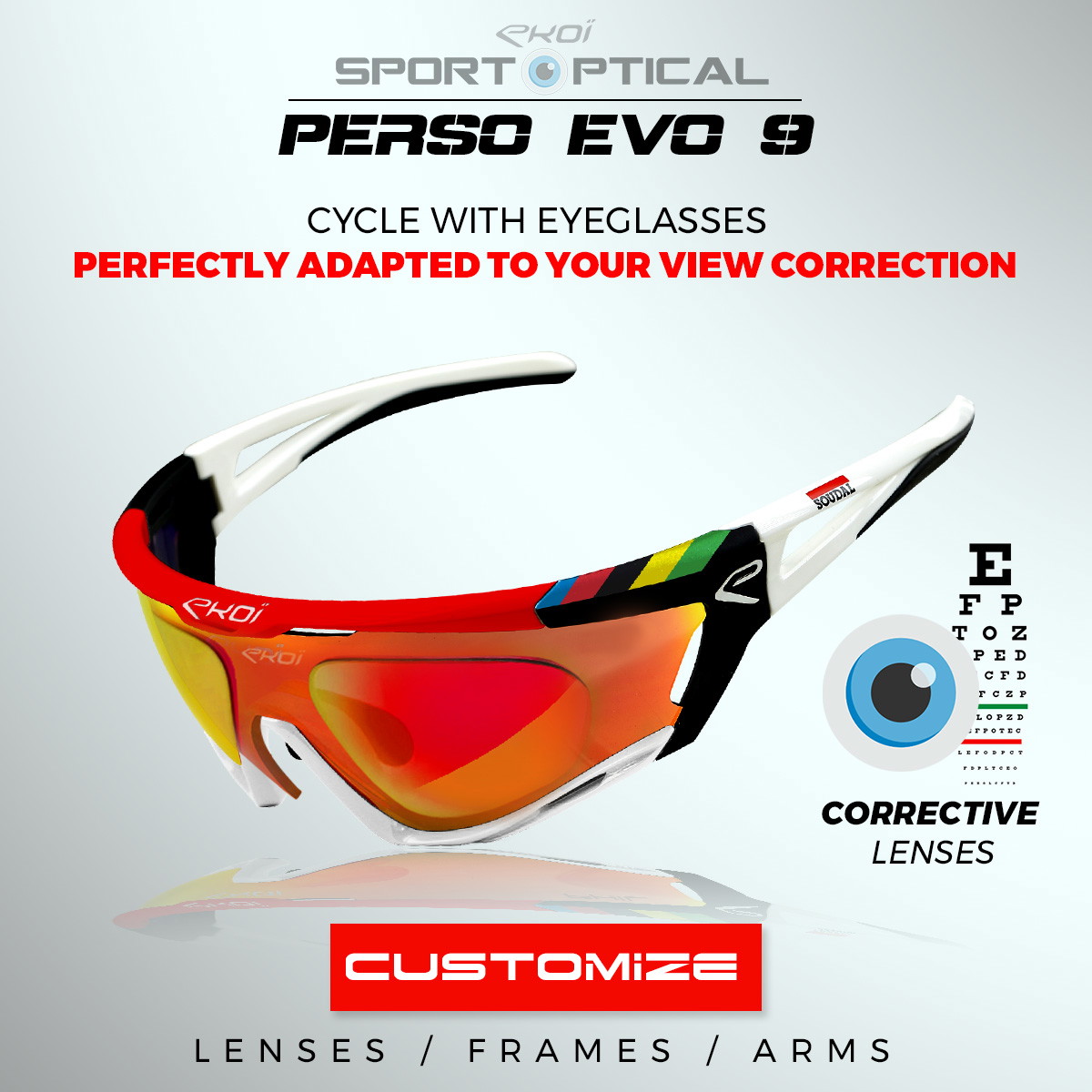
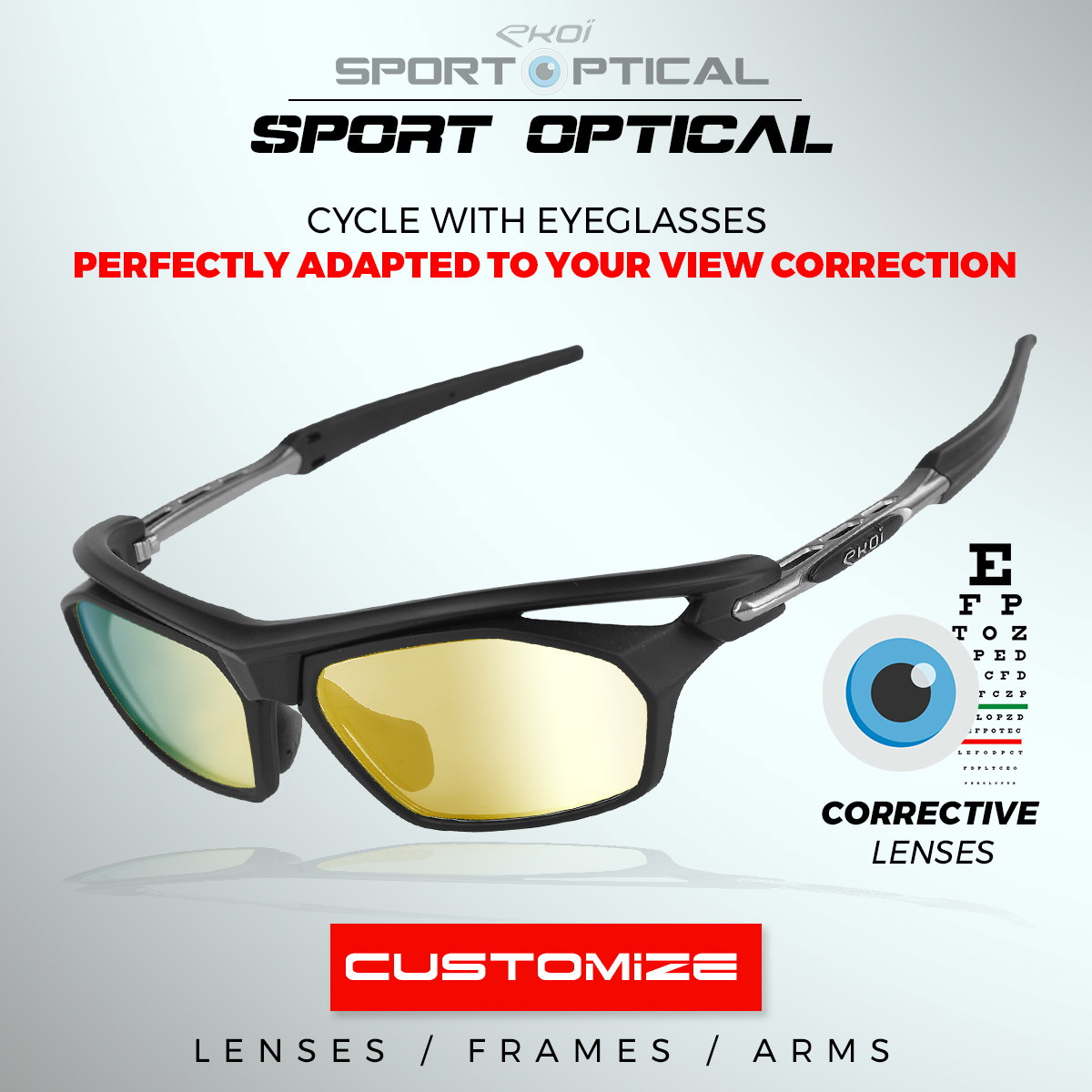
- Cycling glasses with optical correction;
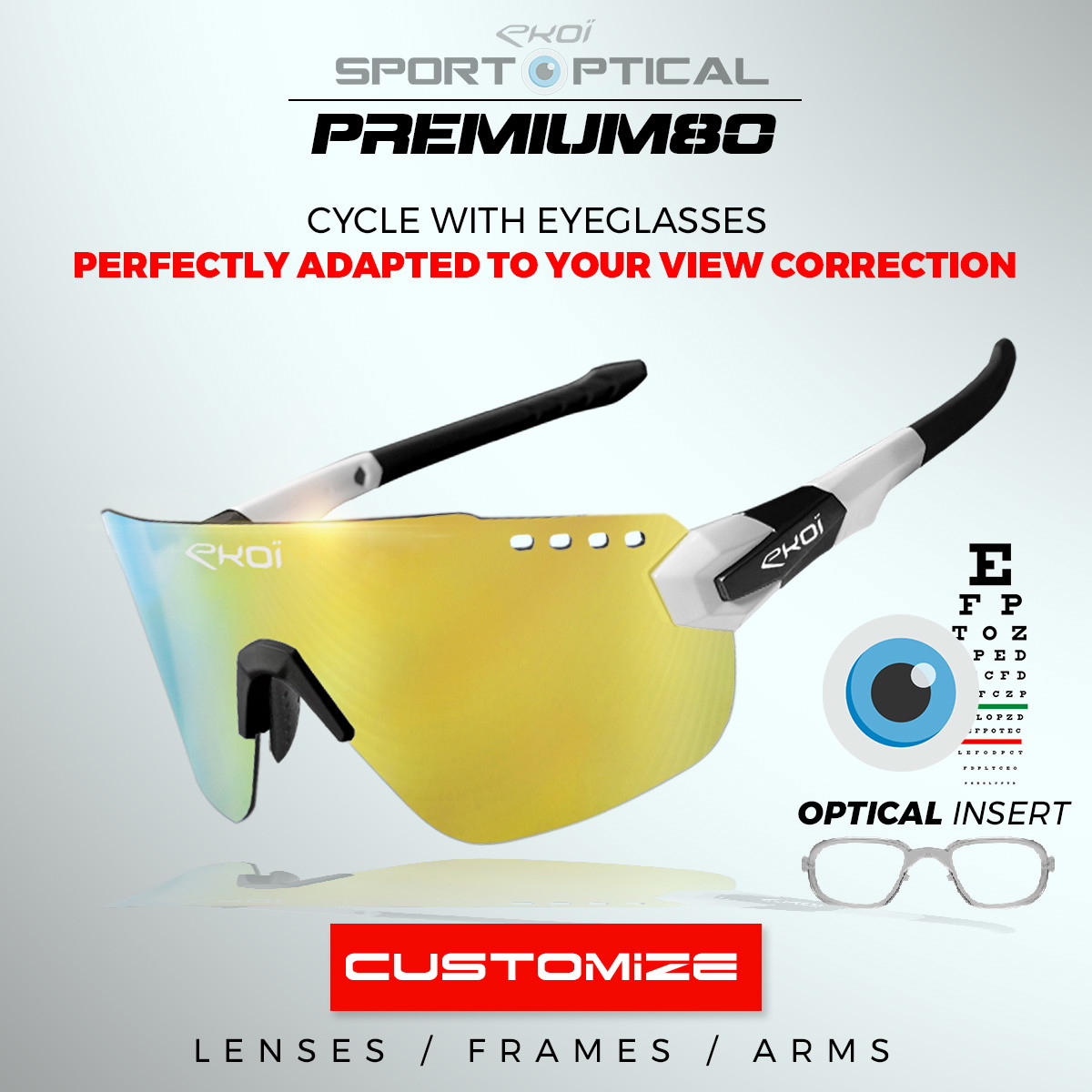
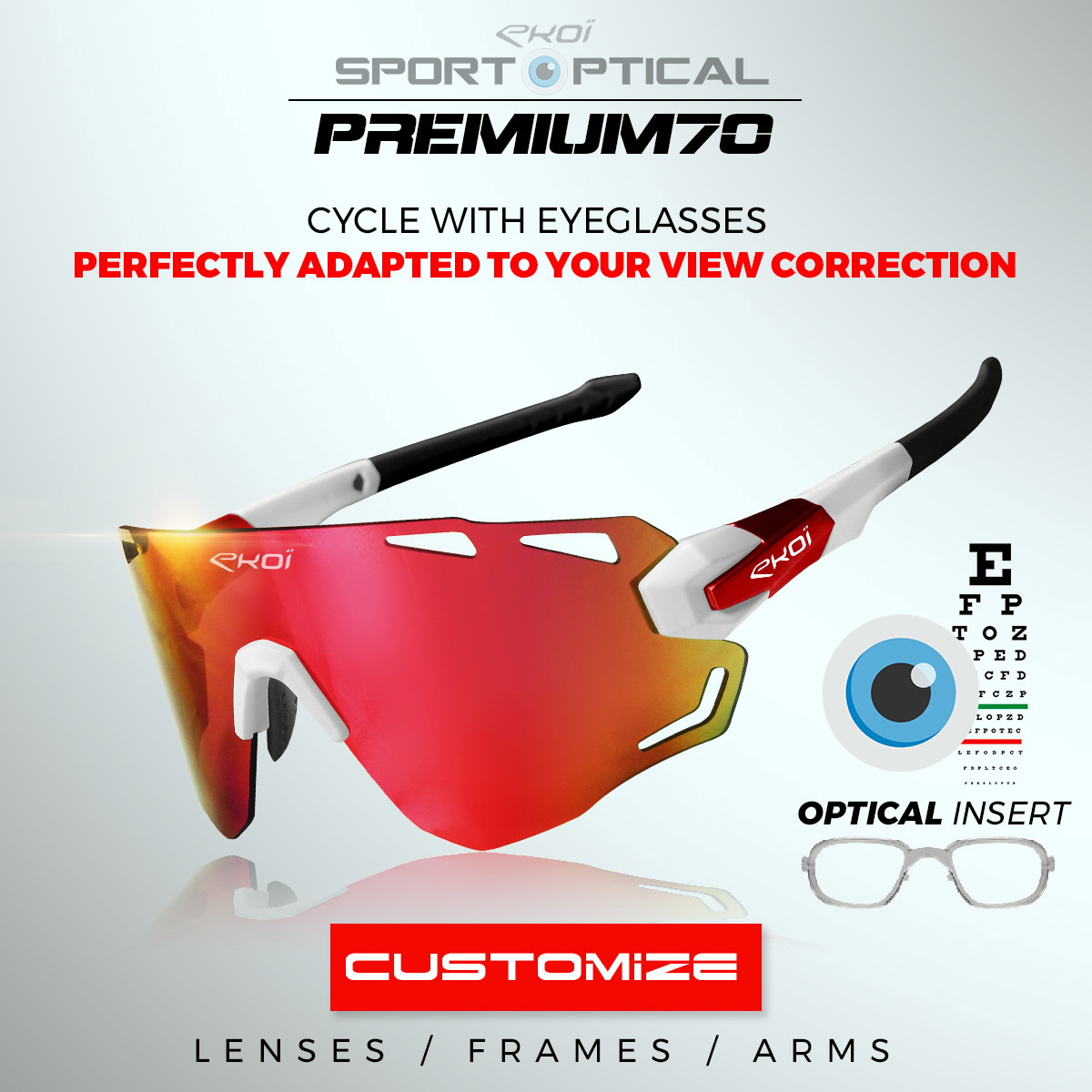
- Cycling glasses with optical inserts.
Thus, your eyes will be perfectly protected by glasses tailored to your vision and you can adopt the perfect cyclist look. Like any pair of cycling glasses, you can choose photochromic lenses (which automatically adapt to the level of brightness and thus reduce eye strain) or a frame with a specific tint. Some models of glasses even offer the possibility of using interchangeable lenses to adapt according to the day's brightness.
Optical inserts often allow for more affordable setups since, in case of a change in vision, only the lenses of the insert need to be changed, which is less costly.
In case of rain, wearing glasses can be problematic on the bike. One solution is to wear a cycling cap under your helmet (or a helmet with a visor). Indeed, this should protect your glasses' lenses from raindrops, giving you a clear view. For cloudy or rainy weather, it is preferable to opt for clear or slightly tinted lenses for better visibility.
Ultimately, should you prefer glasses or contact lenses for cycling?
As we've just seen, the choice between wearing glasses or contact lenses for cycling largely depends on your preference and practice. If you are accustomed to contact lenses and they do not bother you, they will offer you greater freedom since you will have no constraints, including when choosing a model of cycling glasses. But if not, opting for a pair of cycling glasses with corrective lenses or optical inserts will be just as practical.
Now that you have made your choice between glasses or contact lenses for cycling, how about discovering which prescription glasses to choose for cycling?