


 Basket
That's it, you've set your goal to complete your first Ironman. An exciting adventure awaits you! But to cross the finish line, you need to train. Conquering the 226 km of the extreme triathlon demands rigorous preparation, both physically and mentally. It's also a significant personal investment that comes with sacrifices. How long should the training plan last? Should you run a marathon before the big day? How many weekly hours should you dedicate to your rides? Discover how to prepare for an Ironman under the best conditions.
Preparing for an Ironman is not something you improvise
While it is possible (though not recommended) to participate in a short-distance triathlon without a specific training plan, this is not the case for an Ironman.
Indeed, this XXL triathlon combines considerable distances, much longer than S, M, or L formats. To recap, you will need to cover:
- 3.8 km swimming;
- 180 km cycling;
- 42.195 km running.
The enormous mileage and the succession of the three events, typical of the chained discipline, demand that you prepare your body and mind for the effort. It's essential for successfully completing an Ironman and avoiding injuries.
The three pillars of physical preparation
Volume, progression, regularity.
These are the three essential keys to properly prepare for an Ironman, or an Ironman 70.3.
There's no secret: a large volume of training is crucial so that your body can handle the long distances of the Ironman. You need to get your muscles, tendons, and heart accustomed to this exercise, as they will be heavily solicited during the 10 to 16 hours of competition.
Covering the kilometers, yes, but not just that! And especially not just any way. The idea is to train in a progressive and regular manner. We advise you to choose a training plan that matches your goal and your physical abilities. Ensure it fits with your schedule (work, children, vacations, etc.), especially during the peak load phase where the training volume will be high.
The preparation is long: 10 to 20 weeks on average for those attempting the challenge for the first time. More experienced individuals may start their training up to 40 weeks before the big day. Additionally, the French Triathlon Federation (FFTRI) recommends dedicating 10 hours weekly to preparing for an XXL triathlon.
What does the training plan for an Ironman consist of?
The Ironman schedule follows preparation cycles. The training load and intensity gradually increase, then decrease as the deadline approaches. Of course, recovery phases and rest periods are fundamental to reduce muscle fatigue and allow the body to regenerate. Beware of overtraining, it would be totally counterproductive.
A training program includes:
- the practice of the three disciplines (swimming, cycling, running);
- stretching to reduce tension and relax;
- strength training sessions.
Ideally, join a triathlon club to benefit from a training plan designed by a coach and in line with your physical abilities. Additionally, you'll have the opportunity to share the values of triathlon and enjoy the club's camaraderie. Perfect for preparing for an Ironman in a good mood and keeping up your motivation!
Similarly, try to integrate shorter distance triathlon competitions into your training plan, like a Half Ironman. Moreover, your Ironman preparation will help you progress in the discipline that constitutes your weak point.
Mental preparation, a decisive job
Don't neglect the mental aspect! This aspect is essential to reach your full potential on race day. Mental preparation acts as a lever that allows triathletes to give their best.
Additionally, as you can see, the training is particularly time-consuming and demands a lot of personal investment. The 6 hours spent pedaling alone during grey winter days can quickly seem endless and tedious...
Here are some techniques to help you maintain motivation and pleasure:
- Set yourself achievable goals over time.
- Maintain a positive self-talk to boost yourself and avoid negative thoughts. This helps increase self-confidence.
- Visualize yourself in a specific situation: mental imagery involves imagining yourself doing a workout, performing specific actions, succeeding in your ride, etc. You will improve your emotional management and reduce your stress.
- Establish a sports routine to promote concentration and reinforce confidence. However, if you fall into boredom and lose motivation, you can break this routine instead.
Know that a mental coach can help you meet this challenge with a good mindset. They will provide you with effective and personalized tools to help you reach your Ironman dream.
Preparing for the Ironman swim
In swimming, you need to conserve your reserves to come out of the water as fresh as possible.
For your pool workouts, the goal is to familiarize your arms with the long distance without taking breaks. Thus, favor long intervals while making sure to perfect your swimming technique through drills. Plan 3,000 m sessions on average with several blocks interspersed with a few minutes of recovery, for example, 7 x 500 m or 3 x 1000 m.
Of course, it's crucial to get used to swimming in open water, preferably in the environment of your race: lake, sea, river, canal... If you have trouble navigating, imagine how difficult it will be to stay on course amid the waves and the churning mass of hundreds of triathletes in full crawl.
Preparing for the Ironman bike leg
Road cycling will be the longest event of your Ironman. Again, it's essential to get your backside accustomed to the carbon saddle. Ride, ride, ride.
Bike training requires an extended time slot. Therefore, reserve your weekend for long rides, gradually increasing the duration from 3 hours up to 6 hours.
During the week, favor shorter rides or sessions on the home-trainer, as well as recovery sessions to “spin the legs.”
Preparing for the Ironman run
Unlike the previous disciplines, it is not necessarily useful or recommended to run a marathon, i.e., 42.195 km, before the big day. A long run has a greater impact on the body than swimming and cycling and requires more recovery.
Your schedule will include one long aerobic run per week (1 h 45 to 2 h 15): running for a long time, but at low intensity. Occasionally, you can add a bit of intensity to improve your race pace by alternating speeds with short accelerations or fartlek.
Combining training sessions
Preparing for an Ironman also involves combining training sessions. Indeed, running a dry marathon is nothing like the marathon of an Ironman where you accumulate fatigue from the previous two disciplines.
It's especially the bike/run sequence that you'll need to combine. If you have already done a triathlon before, you know that everything often hinges on the second transition. So, don't forget to plan for indirect, delayed, and immediate combinations!
Working on transitions in long-distance triathlon
Triathlon means transitions!
In an Ironman, transitions are less decisive than in short formats, where every second counts. However, poorly executed transitions can quickly cost you 5 minutes on the clock.
Think about practicing your T1 and T2 transitions so that they are as smooth and efficient as possible. This will also allow you to create a checklist of equipment to have in the transition area to ensure you don't forget anything on race day.
Nutrition and hydration
Finally, don't forget to focus on the nutritional aspect, often neglected by triathletes. Take care of your eating habits and remember to hydrate regularly!
So, ready to give it your all to surpass yourself physically and mentally? Ironman goal, start now!
To go further, discover the list of Ironman events in France and the international Ironman calendar.


-
START
 $66.08 -50% $132.16S/ML/XL
 -
START
 Corsa light white helmetUltra-lightweight 195 gr$100.93 -40% $168.21S/ML/XL
 -
START
 $38.45 -60% $96.12one size
 -
START
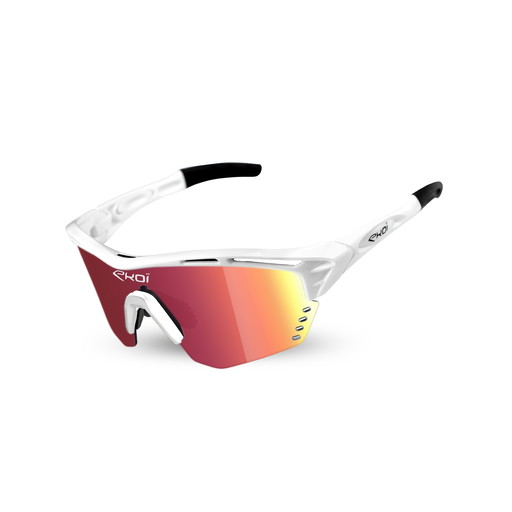 $42.05 -50% $84.10one size
 -
PERF
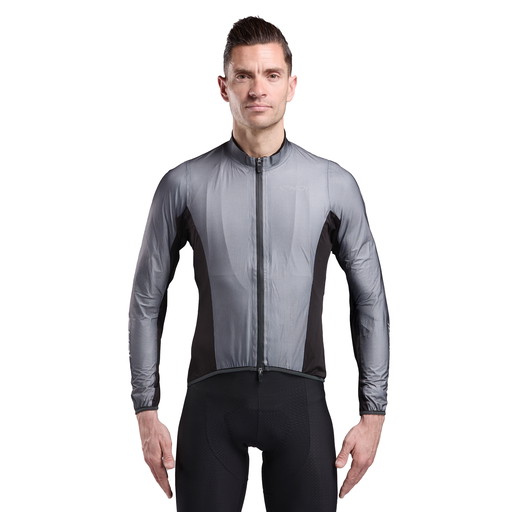 perf waterproof rain jacket100% waterproof Reflective$110.54 -60% $276.35SMLXLXXL
 -
PERF
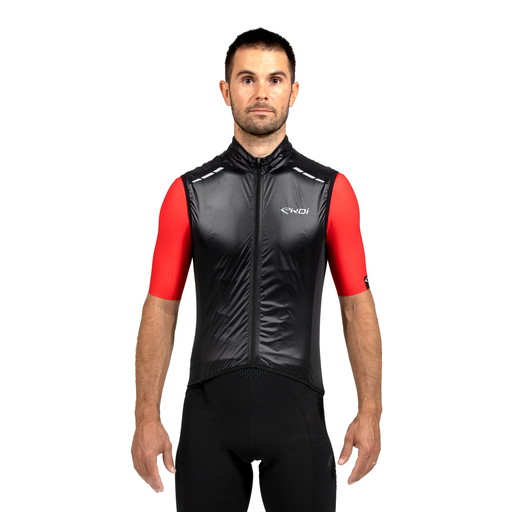 perf wind compact jacket blackReflective Wind proof$48.06 -50% $96.12SMLXLXXLXXXL